
AI vs Human in Digital Marketing: Who Really Wins in 2026?
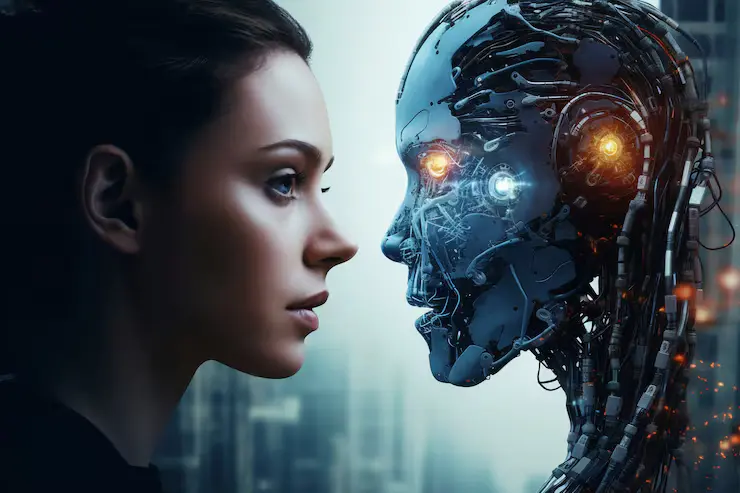
Digital marketing has changed a lot in the last few years. New technologies appear quickly, and businesses are always trying to keep up with the latest trends. One of the biggest changes we are seeing today is the rise of artificial intelligence in marketing. From writing content to analysing customer behaviour, AI tools are now helping marketers do many tasks faster than before. Because of this, many people are asking the same question:
Will AI replace human marketers? Or will humans still play the biggest role in digital marketing?
As we move into 2026, the answer is not as simple as choosing one over the other.
The Growing Role of AI in Marketing
Artificial intelligence has become a powerful tool in the digital marketing world. Businesses are using AI to understand their customers better and make smarter marketing decisions.
For example, AI can analyse huge amounts of data in just a few seconds. It can identify patterns in customer behaviour, predict trends, and even suggest what type of content might perform well.
Many companies also use AI for tasks like:
- Creating social media captions
- Generating blog ideas
- Running automated email campaigns
- Analyzing marketing performance
Personalising ads for different audiences
What makes AI so useful is the speed at which it can process information and complete tasks. Work that previously required several hours can now be done within minutes using AI tools. This helps marketers save time and focus on other important areas of their work.
Another benefit is automation. AI can handle repetitive tasks such as scheduling posts, tracking engagement, or organising customer data. This makes marketing operations more efficient and organised.
However, even with all these capabilities, AI still has some clear limitations.
Where AI Still Struggles
While AI is excellent at processing data, it doesn’t truly understand people. Marketing is not just about numbers and algorithms. It is also about emotions, relationships, and human experiences.
Successful marketing campaigns often connect with people on a personal level. They tell stories, create feelings, and build trust with the audience. These are areas where human creativity and emotional understanding are extremely important.
AI can generate content in seconds, but the results can sometimes feel repetitive or less creative. Sometimes AI-generated content feels repetitive or too generic. It may not fully capture the personality of a brand or the deeper message a company wants to share.
Another challenge is cultural understanding. Marketing messages that work in one place may not work in another. Humans can recognise these differences and adjust their strategies, while AI may struggle with such context. Because of this, human marketers continue to play a very important role.
The Strength of Human Marketers
Human marketers bring something to the table that AI cannot easily replace: creativity and intuition.
A good marketer understands people. They know how customers think, what they care about, and what motivates them to take action. This kind of understanding often comes from real experiences and emotional intelligence.
Humans are also better storytellers. Many successful brands grow because they tell meaningful stories that connect with their audience. These stories create trust and build long-term relationships with customers. Another strength of human marketers is strategic thinking. While AI can provide data and insights, humans decide how to use that information in a smart and creative way.
For example, AI might show that a certain type of content performs well. But a marketer decides how to turn that insight into a campaign that fits the brand’s voice and goals.
Human marketers are also better at handling unexpected situations. Trends change quickly in the digital world, and sometimes marketing strategies need to be adjusted overnight. Humans can adapt, think creatively, and make decisions in ways that machines cannot.
AI vs Human: The Real Comparison
| AI | Human |
|---|---|
| Fast and automated | Creative and emotional |
| Data-driven decisions | Strategic thinking |
| Scalable content production | Brand storytelling |
| Pattern recognition | Intuition and empathy |
| Cost-effective | Relationship building |
AI focuses on efficiency but Humans focus on impact
AI and Humans Working Together
Instead of seeing AI and humans as competitors, it is more helpful to see them as partners.
AI works best when it supports human creativity and decision-making. It can handle technical and data-heavy tasks, while humans focus on ideas, strategy, and emotional connection.
For example:
AI can analyse customer data to understand audience behaviour. Humans can use that insight to design campaigns that truly connect with people. AI can generate content drafts quickly.
Humans can edit, refine, and add personality to make the content unique. When AI and human skills are combined, marketing becomes more powerful and effective.
The Future of Digital Marketing in 2026
As we move further into 2026, the most successful marketers will be those who know how to use AI wisely.
AI will continue to grow and become more advanced. But instead of replacing marketers, it will change the way they work. Marketers will spend less time on repetitive tasks and more time on creativity, strategy, and innovation. This shift allows professionals to focus on building stronger brands and deeper connections with customers.
In many ways, AI becomes a helpful assistant, while humans remain the leaders who guide the overall marketing strategy.
Final Thoughts
So, who really wins the battle between AI and humans in digital marketing? The reality is that there is no single winner.
AI brings speed, automation, and powerful data analysis. Humans bring creativity, empathy, and strategic thinking. The future of digital marketing is not about choosing between AI and humans. It is about learning how to combine the strengths of both.
Pingback: Digital Marketing Trends 2026 : Every Businesses must know